If your ceiling is visibly sagging, dropping, or making cracking sounds, treat it as a safety risk right now. Clear the room below, keep everyone out, and don't go poking around in the ceiling cavity yourself. Book a professional inspection as soon as you can. A qualified Perth contractor like Coastline Construct WA can assess the cause and quote the fix within a day or two of contact.
TL;DR:
- Restrapping is the most common repair for older Perth ceilings with corroded or stretched straps, especially in homes built before 1990.
- Costs vary widely depending on the ceiling's extent, type, and additional work like electrical or insulation removal, with small fixes starting below a thousand dollars.
- A thorough inspection is essential to identify whether restrapping, patching, or full replacement is needed, avoiding short-term fixes that may fail over time.
- Early documentation, including photos and notes on recent leaks or events, improves insurance claim chances and helps in selecting the right contractor.
- Contractors should provide clear, detailed quotes, and only licensed, insured professionals are recommended to ensure proper restrapping, structural repair, and finishing work.
Table of Contents
- What to do now: safety, evidence and the inspection visit
- How professionals fix a sagging ceiling: restrapping, refixing and replacement
- What sagging ceiling repair costs in Perth, and how long it takes
- Insurance, your builder, and what WA Building and Energy advises
- How to choose a Perth ceiling repair contractor
- A Perth builder's view on why ceilings sag here
- Get a quick ceiling inspection and quote from Coastline Construct WA
- Sources
- FAQ
What to do now: safety, evidence and the inspection visit
A sagging ceiling can fail without much warning, so the first move is always to keep people out of the room and clear anything valuable or breakable from underneath it. If you suspect water is involved, or the sag sits near a light fitting or fan, switch off power to that circuit at the board until someone qualified has checked it.
Before you call anyone, do this:
- Photograph the sag or crack from a few angles, including a wide shot that shows its size relative to the room.
- Note when you first saw it and whether it's changed. Rapid growth over days is more urgent than something that's looked the same for months.
- Check whether you've had recent roof leaks, a storm, or new exhaust fans installed. All three are common triggers.
- Write down any sounds. Cracking or popping noises the WA Building and Energy regulator flags as a warning sign of imminent failure.
A tradesperson turning up for an inspection will usually run a visual check first, looking for dropped cornices, blistering around fixing points, and daylight gaps at the wall junction. They'll often tap the sheet to listen for hollow or spongy spots, and use a moisture meter if water damage is suspected. If the sag is severe, they may recommend temporary propping or tell you to avoid the room entirely until repairs start.
Pro Tip: Don't store anything in the roof space above a ceiling that's already showing stress. Extra weight on compromised straps or joists is one of the fastest ways to turn a minor sag into a full collapse.
How professionals fix a sagging ceiling: restrapping, refixing and replacement
The right fix depends entirely on what's actually failed, and that's why an inspection matters more than a guess from the ground. Three main repair paths cover most Perth jobs:
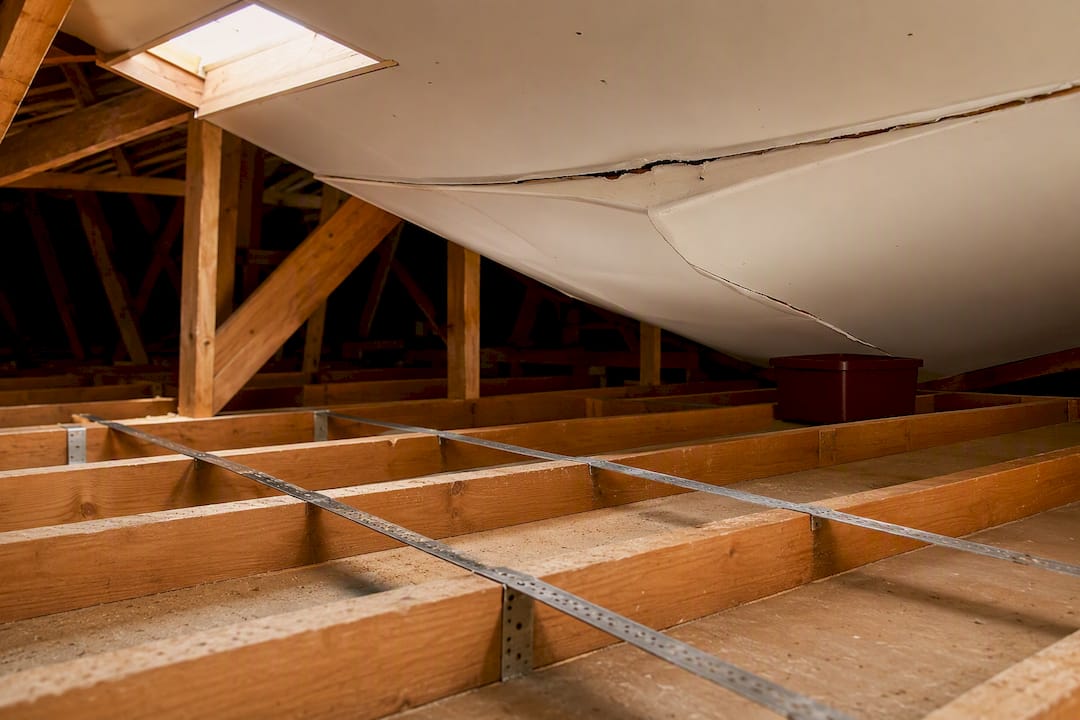
- Restrapping. Older Perth homes, particularly those built before 1990, often have plaster-glass ceilings hung on saddle straps rather than modern fixings. Those straps corrode or stretch over time, and when they let go, the sheet sags evenly across a section rather than cracking at one spot. Restrapping means removing the old straps, fitting new ones to sound joists, and re-securing the sheet. It's a targeted job when the framing itself is fine.
- Gyprock refix and patch. If the plasterboard has simply pulled away from a handful of screws, refixing and patching that section is often enough. This suits smaller, localised sagging where the rest of the ceiling is stable.
- Full replacement. Extensive water damage, rot in the ceiling battens, or framing that's been compromised by long-term moisture usually means the sheet and sometimes the framing need to come out entirely. Patching over a soft, waterlogged ceiling is a short-term fix that fails again.
Any of these jobs can drag in related work. Insulation often has to come down and go back up around the repair area. If the ceiling sag involves light fittings, fans, or wiring, an electrician needs to sign off before the new sheet goes up. Cornices usually need re-bedding or replacing once the new sheet is fixed, and the whole area gets a paint match at the end. A contractor who handles both structural framing and finishing linings can run this as one job instead of three separate trades tripping over each other.
What sagging ceiling repair costs in Perth, and how long it takes
Every quote starts from the same question: what actually caused the sag, and how far does it reach? A restrap on a two-metre section of hallway ceiling is a different job to a full lounge room replacement after a roof leak, and the price gap between them is significant.
The main things that push a quote up or down:
- Ceiling type and age (plaster-glass needing restrapping versus a straightforward plasterboard refix)
- How much of the ceiling is affected, and whether adjoining sections need matching
- Access difficulty, including whether scaffolding or roof space entry is needed
- Whether insulation has to be removed and replaced
- Electrical work required around fittings, fans, or downlights
Ballpark figures for Perth jobs typically start from a small amount for a localised refix and can rise substantially for a full room replacement with insulation and electrical coordination. Those numbers move a lot depending on what's actually behind the sheet, which is exactly why a proper inspection beats a phone quote every time.
Timelines vary the same way. A straightforward refix or small restrap job is often done in a day. Larger replacements, especially where insulation and electrical work are involved, commonly take two to four days. Add drying time on top of that if water damage is part of the picture. Wet plasterboard and timber need to dry out properly before any new sheet goes up, or you're just repeating the job in twelve months.
Insurance, your builder, and what WA Building and Energy advises
WA Building and Energy's guidance is blunt: if your ceiling shows signs of stress, act promptly rather than waiting to see if it settles down. Their first recommended contact is your builder, where the home is known and recent enough that one exists. If you don't know who built the place or the builder's no longer around, your local government can usually point you to construction records.
For an insurance claim, what you document matters as much as the repair itself:
- Dated photos taken as soon as you notice the problem, not weeks later
- A written inspection report identifying the likely cause, since insurers treat water damage and general wear and tear very differently
- Any evidence of a specific trigger event, like a storm or a burst pipe, versus gradual deterioration
Contact your insurer early, before repairs start, and keep every quote and report on file. Some insurers ask for their own assessor or specific remediation quotes, so having a contractor who can coordinate that paperwork alongside the actual repair saves a lot of back and forth.
How to choose a Perth ceiling repair contractor
A fair written quote should spell out the scope of work, materials being used, a clear price, an estimated timeline, and any follow-up work like painting or cornice replacement. If a quote is vague on any of those, ask for specifics before you sign anything.
Before hiring anyone, ask:
- Are you licensed and insured for this type of work in WA?
- Have you restrapped plaster-glass ceilings before, and can you show examples?
- Can you coordinate electrical or insulation work as part of the job, or will I need to organise that separately?
- What warranty do you offer on the repair, and is it in writing?
- What's included in the quote, and what would trigger extra costs?
Watch for red flags: contractors who dodge questions about licensing, push you to sign on the spot, or hand over a one-line quote with no breakdown. A legitimate operator will happily walk you through the scope and won't flinch at being asked for licence details.
Pro Tip: Ask specifically whether the quote includes reinstating insulation and repainting. These get left off cheaper quotes and turn up as "extras" once the job's already underway.
A Perth builder's view on why ceilings sag here
Perth's dry climate causes more timber shrinkage and movement than people expect, and that shows up as hairline cracking long before a full sag develops. Bathroom and kitchen exhaust fans that vent straight into the ceiling cavity, rather than outside, are a quieter culprit. Moisture builds up unnoticed for years and softens the fixing points. Undetected roof leaks do the same thing more slowly.
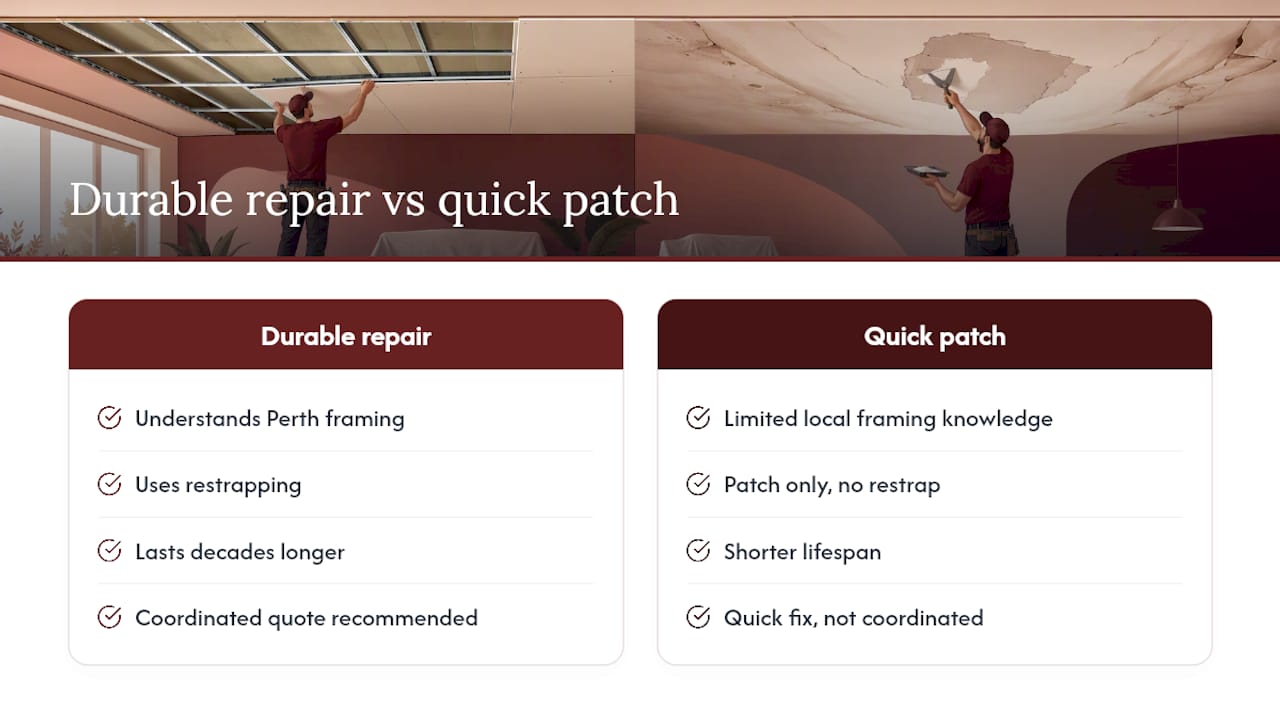
Ceilings hung by an experienced local carpenter who understands Perth framing and restrapping tend to last decades longer than a rushed patch job. That's the gap that matters, and it's why a coordinated quote beats a quick fix every time.
— Steven
Get a quick ceiling inspection and quote from Coastline Construct WA
A professional contractor can handle the whole job, not just the visible symptom. That means inspection, restrapping, timber framing repair where the structure itself is compromised, plasterboard replacement, insulation reinstatement, and coordinating electricians or painters to avoid juggling multiple trades and invoices.

Before you call, have a few photos of the sag, notes on when it started or whether you've heard cracking, and any details about recent leaks or new exhaust fans. That's usually enough for a fast, no-obligation quote without needing a site visit first. If the cause turns out to be structural, the same team handles timber roof framing and wall and ceiling linings so the fix and the finish come from one place. Head to the services page to see the full range or get in touch to arrange your inspection.
FAQ
How much does it cost to repair a sagging ceiling in Perth?
Costs depend on the ceiling type, how much area is affected, and whether restrapping, insulation, or electrical work is involved. A small localised refix sits at the lower end, while a full room replacement with insulation and wiring coordination runs much higher, so an inspection is the only way to get an accurate figure for your home.
How much does it cost to fix a sagging ceiling generally?
Pricing varies with the extent of damage and access difficulty, whether that's a straightforward gyprock refix or a full restrap of an older plaster-glass ceiling. Get a written quote after inspection rather than relying on a rough estimate over the phone.
Can a sagging ceiling be fixed?
Yes, in almost every case. Localised sagging is usually solved with a refix or patch, older straps are addressed through restrapping, and only extensive water damage or rotted framing typically requires full replacement, as outlined in WA Building and Energy's guidance.
Will insurance cover a sagging ceiling?
It depends on the cause. Sudden damage from a storm or burst pipe is more likely to be covered than gradual wear and tear, so insurers usually want dated photos and a written inspection report identifying the cause before assessing a claim. Contact your insurer early and keep every report and quote on file.
Who should I contact first about a stressed ceiling?
WA Building and Energy advises contacting your builder first if the home is recent enough that one's on record, or your local government if you can't identify them. From there, a licensed Perth contractor can inspect the ceiling and provide a quote for repair.